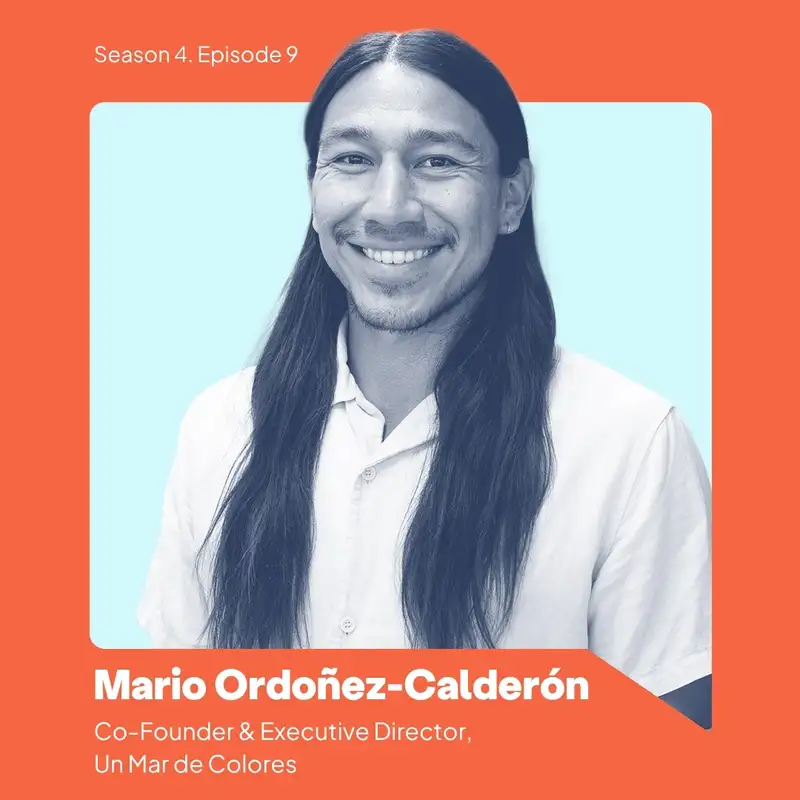
Mario Ordóñez-Calderón: The Ocean as a Place of Belonging
Grant Oliphant 0:11
Hey, Crystal.
Crystal Page 0:11
Hi, Grant. How are you?
Grant Oliphant 0:12
I am. I'm great. I just had the most magical conversation with Mario Ordóñez Calderón, who is the head of an organization called Un Mar de Colores, such a great conversation about the work they do to expose kids to to the ocean, to the experience of surfing.
Crystal Page 0:38
Yeah, I think I could have listened to you all talk for another couple of hours. It was relaxing and open, so I'm excited to dive in. But we should also probably acknowledge that Mario is a grantee through Healing Through Arts and Nature. Right?
Grant Oliphant 0:54
Thank you for pointing that out, and we we do talk about that in the interview. And I, you know, I think I think something I would encourage listeners and and to pay attention to is he is a person who embodies a certain relaxed ethic around surfing, and at the same time, this is a guy who gets things done and has real purpose in the work, and you're going to see that. You know, I think he. Well, we're going to let people hear for themselves and see for themselves. Yeah. But there's, it's this was just a terrific conversation.
Crystal Page 1:35
So shall we stop and talk with Mario?
Grant Oliphant 1:37
Let's do it,
Grant Oliphant 1:42
Mario Ordoñez-Calderón , it's a pleasure to welcome you to the program.
Mario Ordoñez-Calderón 1:47
I'm incredibly happy to be here. Thanks for having me. Yeah,
Grant Oliphant 1:49
thank you for thank you for taking the time. You and I were just talking, and you admitted that we took you away from the the waves today. So I um I really appreciate your being here. You are the head of an organization called Un Mar de Colores, and we got to know you only recently, relatively through our Healing Through Arts and Nature program. And I want to get to the work that you do and the legislation that you've helped bring about, but first, I just want to talk about Un Mar and what it is and and how you became involved.
Mario Ordoñez-Calderón 2:12
Yeah, I love to give you a little background story on it. It definitely it's a it's a story that really came about in personal reflection of all the opportunities that surfing brought into my life. I didn't get connected to the water until I was an adult, and it took a best friend who did surf to be like, "Hey, come out with me, and you know, I'll teach you to surf. And what that looks like in surfing language is here's a board, good luck, and then and then he paddles out.
Grant Oliphant 2:54
I have a friend who's working on me. I just told you, yeah, yeah, exactly.
Mario Ordoñez-Calderón 2:57
It's it's usually the experience goes, your friend goes with you, but then paddles out and surfs, and you get like thrashed by the waves and get kicked out, and you you know so the surfing sessions looked really limited. He'd surf for an hour, and I'd surf for 20 minutes, and then sit on the beach and just watch. But something about it just kept calling me back to it. And in getting better with surfing, I found
Grant Oliphant 3:17
how old were you at the at that time?
Mario Ordoñez-Calderón 3:19
I was probably around 20 years old, and I was just recently had moved to Oceanside because I was stationed on Camp Pendleton. I was serving in the Navy as a medic, and something about the water kept calling me back to it, and I became you know decent, and I've met really a lot of good friends through it, and even brought me job opportunities. So it kept me up in North County, San Diego, and Oceanside and Encinitas, and I was sort of seeing within my neighborhood. I live in like a historically Latino part of Encinitas. A lot of people don't know it, but they kind of overlook it. Like on the other side of the Five Freeway, there there's just an area where there's just a lot of a large Latino population, and I'd wave to my neighbors, and they'd wave to me, and we'd speak a little bit. And I'd load up my surfboard, and they'd load up their kids to get ready to go to school. And then we'd go opposite ways. And as I was driving down to the beach, I live a mile away from one of the world a world class wave. It's called Swami's, and it's just iconic, known in surf world.
Grant Oliphant 4:18
Yeah, I know it well, although I've never surfed it,
Mario Ordoñez-Calderón 4:22
right? It's just beautiful, right? Because it's like that point, and it's got the self-realization meditation temple. It's super unique, and the wave is amazing. And in the winter, it gets really good. But this this family that I had a relationship with as a neighbor, I'd never see down at the ocean, and that's when I had my aha moment around like being a bridge to that opportunity and really making sure that that same kid didn't have to go through that same time period of becoming an adult to get connected to the water. So how do I? So that's what sparked the idea of Un mar de Colores, and it really started volunteer run. I got. The resources that I had, which at the time was just like friends who knew how to surf and had the surfboards and had the equipment, and then I connected with the English language advisory committee of a few schools in Encinitas, and then started working with those kids that were furthest away from that opportunity, getting to the water, and it really just you know took off after that.
Grant Oliphant 5:22
Amazing. So the organization is set up to do to do precisely that: introduce young people to the water and the waves. And how do you do that?
Mario Ordoñez-Calderón 5:36
Yeah, exactly.
Grant Oliphant 5:36
You just take them out into the waves and let them be thrashed around by the water?
Mario Ordoñez-Calderón 5:41
No, absolutely. Yeah, it's it's like the that that initial period of like learning to surf is so critical. So you're really holding a precious moment for a young person to have a lifelong connection to this natural space, to this blue space. So we hold it with a lot of care and a lot of intention. We're doing a couple things at once, right? We're doing surf instruction, but then we're also doing community bonding. We're doing environmental education. We're really building a like a holistic experience for this student. And what we're doing alongside that is a lot of community engagement. We're inviting parents out to witness this their their their child just like step into this space of the unknown, figure something out about themselves as they become courageous and brave when they catch their first wave, and then we're watching that hook turn into lifelong connection to the ocean, and then transferring over to stewardship-stewardship of place, but also stewardship of yourself-and that's really what we're we're set off to do. We're really trying to bridge those social and economical gaps in coastal access by providing free surf therapy, environmental education, and long-term mentorship to underserved youth.
Grant Oliphant 6:51
I'm thinking that for a lot of folks, even in San Diego, it may be surprising to hear that young people. There are a lot of young people in this community, who've never been to the ocean and who certainly have never had the sort of experience you're describing, you know. But I'm also thinking about people outside San Diego who may not identify with surfing as you know they they can't even think about why this would matter. For me, I as a kid, I grew up wanting to live in California, but I grew up in Denver, Colorado. And you know, for people in the Midwest, maybe imagine that you live next to the mountains, but you've never been to the mountains, or you live next to the best woods in the world, but you've never been into the woods. And it's the same sort of experience, right? That are you are you surprised often by how many young people haven't had any exposure to the water?
Mario Ordoñez-Calderón 7:48
I definitely am surprised. You know, as a city that prides itself as like a coastal community and the access to you know 70 miles of beach, you know, is whatever the coastline that we have here, and it's 70 miles of opportunity to step into that and build a relationship with that, but I I really appreciate your question because I think the framing of I think I want to take a step back from surfing and just invite people to think about how they connect to their local waterways, and that's real. We're using surfing as like a catalyst and a hook because it is so San Diego, right? Right. It is very like
Grant Oliphant 8:17
totallySan Diego. I
Mario Ordoñez-Calderón 8:18
It's totally San Diego. It's like and so it's a vision for what San Diego could do in the sense of like using this sport that's catalytic to the culture and to the environment, but really just inviting people to connect with a larger theme, which is like water and waterways, right? And what water represents in your life. So whether it be the head like headwaters or your local creek, but like just kind of transferring over the knowledge that's happening on the shoreline through the surf back into their communities, you know, because it is something where, like, yeah, maybe inland communities don't relate to it as much. Even coastal communities, like, unless you've had that invitation and been like, "Hey, no, this is your shoreline too. This is your, this is how you create your story here. Yeah, it could feel distant. You know, it could feel hundreds of miles away.
Grant Oliphant 9:01
Yeah. With that as background, I want to have have us now turn to legislation that you were involved in. And there's so much I want to ask you about this because you know I think for many of our listeners they'd wonder why would you need legislation that relevant relevant to this, and you know what would it be about? But it was AB 2939 is the number, and and really what you were trying to do through this was facilitate access to the experience you just described. Tell us a little bit about the story behind that, and why you even had to do it?
Mario Ordoñez-Calderón 9:42
Absolutely, yeah. So essentially, yeah, something as simple as getting kids outside in nature comes with a lot of actual operational, administrative, backend support that needs to go down. And what you know, when I set off to do what we were doing with Un mar de Colores because of my Navy. Background. It was like checklist, right? Like first thing I did was get insurance, and the second thing I attempted to do was try to get a permit. Come to find out, just the the
Grant Oliphant 10:11
welcome to the world of regulation.
Mario Ordoñez-Calderón 10:12
Yeah, exactly. The yeah, just exempt the the pathways of permitting and how it's different from city to city, and now it's different between the land manager and like the agency that runs that city. And some cities are parks. Some cities are some some cities are managed by state parks. Some cities are managed by themselves. So the permitting process was incredibly difficult to navigate. Yet we were sitting there, you know, with the initiative to get more kids outside. At the time, we were grantees of the state and so supporters of this like top down like outdoors for all type of thing. Yet we were running into those those those restrictive barriers of like not not not being able to take kids out during certain times, not being able to access the beach on the weekends, and really you know it was becoming incredibly difficult to do to do programming, and it was it was forcing us to have to hide and work in a way that we didn't really want. We were being good trouble in the sense of like we had our safety protocols, but we were you know finding spots that maybe the lifeguard wasn't there, you know, and that's not what we wanted to do. We wanted to be right in front of the lifeguards, right? Right. So, in coming to find out, this was just a statewide issue that all these organizations that particularly do like surfing and aquatic sports for underserved youth or underserved communities were running into the same barriers from Northern California to Southern California. And really, who brought me into that fight was Ben McCue from Outdoor Outreach, and he
Grant Oliphant 11:41
also a friend of the foundation, like you, yeah, yeah,
Mario Ordoñez-Calderón 11:44
exactly. Awesome, awesome mentor. He had really like had done a lot of the legwork around, like, okay, this is this. They were running into the same thing with O O, and not just only on the coast, but like in in parks, like local parks, right in in San Diego. So they were trying to figure something out that would just make this simple act of getting kids outside just a lot, a lot easier and a lot safer, right? And in partnership with local authorities, right? So they authored AB 2939 and really I was able to kind of follow it up. I got in there early, provided testimony at some some committee hearings in Sacramento about how this would support our programming, and then luckily we got it passed. So what this means is essentially like any outdoor, any outdoor equity group that's operating under the size of 30 can use a city managed park or beach free of free of permitting costs, right? So it's an incredible win for all these organizations that have been like either paying too much or not even participating in the process because it's so complicated, right? It just allows groups with a minimal impact to be treated as the general public, and that's really what it comes back down to. It was it was getting harder for a kid in my program to access the beach than it was for any kid with resources to go and attend and show up with 15 friends and just surf and things like that, right? So
Grant Oliphant 13:09
yeah, they could show up spontaneously anytime they wanted,
Mario Ordoñez-Calderón 13:12
but as soon as they got, but the
Grant Oliphant 13:13
barriers that you faced or your kids faced would keep them away.
Mario Ordoñez-Calderón 13:18
Yeah,
Grant Oliphant 13:18
yeah, and
Mario Ordoñez-Calderón 13:19
it should be the opposite.
Grant Oliphant 13:20
You've said that that legislation was only the beginning, that the real work began after the passage of it. What do you mean by that?
Mario Ordoñez-Calderón 13:29
Yeah, exactly. So I was. I'm new to legislation.
Grant Oliphant 13:32
That's like a rule for life, probably. But you know, yeah. So
Mario Ordoñez-Calderón 13:36
It is. Yeah, I'm new to legislation, and really, the win happens with the law passing, but then a law passes, and unless it's punitive, there's no communication around it. Right? There was no teeth to like communicate around it, so it's not like every all of a sudden every lifeguard knows about this, or every parks and rec department across the state knows about it.
Grant Oliphant 13:59
So do you have to show up with a copy of AB 2939 to get it.
Mario Ordoñez-Calderón 14:03
We legitimately did. Yeah, we had to have a little placard that said like new legislation. We're operating with safety under this. Like wow, yeah, and no, but that's what occurred, right? So the first summer that we started exercising this was essentially like I mentioned, we were sort of having to like go be good trouble, hide, and but this summer that the legislation passed, I popped up my easy up. It was branded. It said un mar de colores. We were so incredibly happy about like the ability to take space and show people that we were there doing good work.
Grant Oliphant 14:37
And the easy up for the non beach goers is a tent, basically, right?
Mario Ordoñez-Calderón 14:40
Yes, exactly. Like a little canopy tent that just has our name on it, right? So parents identify with it, you know, things like that. So, yeah, we popped it up, and we had the little placard. Sure enough, lifeguards doing their job come up, and they're like, "Hey, is this a thing? Is this is you guys? Are you guys a legitimate thing? And I was like, "Yeah, hey, I know." Is gonna sound awkward or interesting or new, but there's a new law, and I'm under 30, and we're doing outdoor equity group. We're we're a nonprofit, and this pertains to us and California tribes. So I'm doing a little education there on the ground while like the programming's happening, and they're they were like incredibly interested, you know. But sure enough, like had to run it up the chain. Oh,
Grant Oliphant 15:23
really? They wouldn't. I mean, they had to go take it to their supervisors. Yeah. So,
Mario Ordoñez-Calderón 15:28
so come Monday, come Monday. This was within the city of Oceanside. Come Monday, I'm sitting there with Ben, and it's this. You know, city officials, chief life guards, parks and rec department heads, city attorney, and we're doing that that public education and that outreach to to government officials around like this new legislation. So we're introducing them to them and asking them how can we be good partners to you on this and like hear all your concerns about it too while still doing our work. And that meeting went incredibly successful. Like they they they received it well. They were like, okay, I think that this can work. Originally, our concerns were around this, that, and this, but this seems like it's something that we want to celebrate. And then, yeah. So the city of Oceanside really embraced it, and we worked with the lifeguard captains to understand like their concerns, and they talked to us about the ratios that they would like to see in the water to sort of alleviate some of those concerns, and we decided to play ball, and it went well, right? It went really well, and it's a it's it's a model that a lot of cities can replicate because the legislation helps support you know statewide equity initiatives, especially in the outdoor space.
Grant Oliphant 16:39
You've talked about how the shoreline can sometimes begin to feel like it's for tourists rather than for people who live in the community, and it would have been easy to get your back up when the when the city officials started coming down on you, and a lot of people would have reacted that way. How did you find yourself managing that tension when when you were in the moment, and what did it teach you about doing this work going forward?
Mario Ordoñez-Calderón 17:11
Yeah, I think that the thing was that I was sort of I was understanding that this was a new thing to any to a person, and when I approach it from that, I guess like bird's eye view, it allow me to calm down a little bit more. Like teaching new information to anyone, that's always incredibly difficult. It's disruptive to someone's, you know. You can just I kind of saw the gears turning around, like to a hammer, everything looks like a nail, right? So I kind of saw it with this person who's doing their job and understanding that, like, hey, here, here, this is, and I, what we did was we, we, we allowed for that space to kind of take it offline, right? Like, hey, here's my card. Let's talk on Monday, and that's what occurred, right, in a more like calm and just a productive way. But unfortunately, a lot of the times, what what this leads to is that I did have that ability to do that, and unfortunately, there's a lot of field practitioners. Whoever's leading the outdoors programs, like I'm gonna call them practitioners, they are young adults. A lot of the times, they are young adults of color, and they are having then to talk to authority figures a lot with badges, right?
Grant Oliphant 18:22
Right.
Mario Ordoñez-Calderón 18:23
While they're having to manage a group of youth at the same time, so that relationship should be one of like complete court, like from my not to the practitioners, but my advice to the others, it should be one of cordialness and encouragement,
Grant Oliphant 18:38
yes,
Mario Ordoñez-Calderón 18:38
rather than like disciplinary actions. And I think that sometimes that gets it gets stepped into the other way.
Grant Oliphant 18:43
Yeah,
Mario Ordoñez-Calderón 18:43
and it's really unfortunate, right? Because it's not like our field practitioners are- they're doing so much already, and so now they're having to like take on like you know public education to to these authorities as well. So it's just unfair.
Grant Oliphant 18:58
Yeah, it seems unfair when, as you said before, like tourists can just arrive and throw their stuff out on the beach, and and it feels welcoming to them. And you're having to navigate a very different experience, or help your teams navigate a really different experience. So I get, you know, I get I get two vibes off of you. One is you're incredibly calm, and and and the other is I can tell you get stuff done. You know, and I'm wondering what the Navy training that you had, how that has played for you in this role. Like when you were, when you were dealing with the frustrations of a public system and public officials who didn't get what what you were asking for, you had experience in bureaucracy, I imagine. Yeah, exactly. How did that come into play?
Mario Ordoñez-Calderón 19:56
Yeah, I man, my time in the Navy, I think I had an incredible. Experience in the Navy. I really did. I joined to be a medic. I was able to be a medic. I didn't get, you know, I didn't become. I didn't get shipped off into a boat. I was just doing a job I didn't want to do. And after I got my EMT training, I found myself on Camp Pendleton as a physical therapy assistant under the leadership of a dear friend now, but my commander, who would just like push us to be more than we thought we could be, right? I just found a lot of courage in the capability that I had, and really, that's like what the Navy allowed me to see in myself was like that I can hold so much and do so much together as a unit, but also too like how transitions and power because people rotate duty stations, right? So how do you hold like the mission forward while recognizing that like leadership changes? And I think that that kind of gave me a perspective of like how bureaucratic and political systems work. Right, right. And um, and just camaraderie, right? Like you're really you you you join it because you want to make something of yourself a lot of the times, but then you you really stay because of the people like to the left and right of you, and yeah. So that that's I wasn't that was my experience there, and that's what I kind of like helped bring out in me.
Grant Oliphant 21:15
You know, a lot of people join the navy and then they never really have contact with the water. You know, which is surprising.
Mario Ordoñez-Calderón 21:22
Yeah, that was totally me. That was I was a dirt
Grant Oliphant 21:25
So I wasn't. That was the Navy
Grant Oliphant 21:27
didn't add to the whole Un Mar de Colores story.
Mario Ordoñez-Calderón 21:31
Yeah, no, it's funny enough. Yeah, the dirt
Grant Oliphant 21:34
added to the camaraderie, the understanding of how to work through bureaucracy. But okay,
Mario Ordoñez-Calderón 21:38
so dirt sailor. Yeah, that's what. Yeah, dirt sailor. I ended up like with the Marines, and then just isn't that
Grant Oliphant 21:43
Is that actually? I have not heard that phrase before. Oh, that's great. Yeah. So
Mario Ordoñez-Calderón 21:46
just the one time I stepped onto a carrier's the USS Midway, which is a museum, right? Like I did some some what's it called volunteer time there, and stood guard during a ceremony, something like that. But no, I was really just stuck in a clinic rehabbing Marines from injuries, whether it be like an acute ankle injury or a gunnery sergeant who had been in 20 plus years, and his shoulder was just like you know had been spent. So spent my time just like helping people like rehab back into because we were they're all athletes, right? We're so we're going beyond just like back to normal status. We're trying to get them back to to the line of duty, which requires a lot of physical activation. So really, it was incredible work. And at the same time, the commander was really forward in pushing us to go and do night school. So I got credentialed and became a physical therapy assistant, became an EMT, and then got out and had I had my licenses to go and work something outside of like a part, you know, a minimum wage job. So that really helped me just be be independent.
Grant Oliphant 22:48
Yeah, amazing. I um, you know, it's it's so funny because you somebody like me just makes the assumption that oh, he had a navy back then, must have yeah,
Mario Ordoñez-Calderón 22:59
must have been always on the water and like yeah no water's always played a really like I guess it's always been there you know whether it be like really forefront or in the background just kind of a you know flowing because
Grant Oliphant 23:11
for you as a kid a younger kid?
Mario Ordoñez-Calderón 23:13
yeah so this was like the this was the the trip where like I kind of put it all together essentially like as a kid I grew up going to Mexico my family's from Yucatan. We're Mayan indigenous, and as you know, it's the land of cenotes.
Grant Oliphant 23:25
Right. Oh, so did you swim in the cenotes?
Mario Ordoñez-Calderón 23:28
Yeah.
Grant Oliphant 23:28
Oh, wow.
Mario Ordoñez-Calderón 23:29
Yeah, beautiful teal waters. And so I would swim that the Caribbean water, but I never like connected that dots between my love for those waters and my love for the coast, California coastal waters, until I learned to surf, and then I had that big like whoa! I've always loved water, and then come to find out the town that my parents are from is called Muna, which in Mayan means land of soft and supple water.
Grant Oliphant 23:55
Oh wow!
Mario Ordoñez-Calderón 23:57
So it's kind of
Grant Oliphant 23:57
beautiful.
Mario Ordoñez-Calderón 23:58
It's always just been there. It's always just water's always been there for me.
Grant Oliphant 24:01
Amazing. Was there anything else about that that heritage or background that came into play around wanting to help others and work with kids?
Mario Ordoñez-Calderón 24:14
Yeah, I'd say it's the central point. I think I approach everything through my indigeneity first. It's trying to live in in in understanding how we restore relationship with place and how that forms identity, and that's really like kind of embedded to our work. So, how do we reconnect with these natural environments in a way that's going to be like reciprocal for all those involved, right? And I think that that that's what we're trying to do is allow students to reconnect with their with their ties to place with coastal with the coastal waters and their waterways, and then inspire them to then learn to protect it. And I think that's something that's inherent for a large majority of indigenous communities, and particularly like I saw it with my grandpa back in Yucatan. And the ways he had reverence for the four winds, and the ways he had held ceremony for the four winds, and then the ways he was just really in tune with nature, and there was just no separation there, right? And I've been trying to slowly like use that as use his teachings as as my guide in how we navigate in in San Diego, you know, and I think it's what makes us really be able to hold all these different sectors of mental health and identity and environmental education and sport with surfing in and under our umbrella as a hub that feels very cohesive at Un mar de Colores is just understanding that it is all interconnected.
Grant Oliphant 25:45
The stories you inherited from your grandfather. Yeah. What would be an example of the of of the way in which he thought about the four winds? I'd love to just hear you say a little bit more about that because I think it it really has a bearing on what you just said about the the various ways in which you approach the work within Un Mar de Colores.
Mario Ordoñez-Calderón 26:07
Yeah, absolutely. So my abuelo, Don Juan Ordóñez, lived to be 99 years old and rode his bicycle until he was 96 years old. So this man was an active man.
Grant Oliphant 26:19
Yeah, and great role model for us all. Yes,
Mario Ordoñez-Calderón 26:22
yes, and he'd only slowed down during the pandemic when they asked everyone to stay inside, right? So essentially, I grew up as a kid like alongside him, really looking up to him, and I'd always see him wake up at the crack of dawn and then go and tend to the field. So he had he lived in rhythm with the day, and he lived in rhythm with like being out in nature, and and particularly with the ceremony that I'm in reference to with the four winds, there was one particularly property that he managed in Muna, and there he said that he was like, this is a space of like reverence, and there's spirit here, and there's a ceremony that needs to be conducted here, and he that was the one space. And he'd say every six months I pray to the four winds. So he held his ceremony, and he it was called saca. So he would set up his little jicaras and make this little mixture of essentially what was like cornmeal and some honey, and put those together, light some candles, go and spread it in the four corners of the property, and in in respect to the four winds. And he said that essentially that ceremony for him was in prayer of the four winds for like just to maintain the house, keep it protected, and therefore like keep the whole the whole area protected. And he told me about a story where that you know he had this his story around when that wasn't conducted when a when a person stepped into a place and didn't have reference for the four winds and how that it went incredibly bad for that person like the that it just like waves and waves of reasons to like the house was pushing him out you know like essentially like the property was pushing him out whether it would have been natural disaster or just like an economic downturn, but he told me about that, so that was something I got to witness him do.
Grant Oliphant 28:09
Yeah,
Mario Ordoñez-Calderón 28:10
and it's really incredible because there wasn't any acclaim to it, right? It was just a part of what he it was his duty. Yeah, it wasn't like you know important, and you know as a kid, you're kind of just like it's what you're just absorbing it. You're like, this is normal. This is what my grandpa. This is what. And then you know you grow up, you're like holy crap.
Grant Oliphant 28:33
Yeah, you can say it. Yeah, yeah.
Mario Ordoñez-Calderón 28:36
You grow up and you're like, dang, that was so powerful and that's so deep, and like, how do you hold that here in having reverence for just these elements, which you can feel so disconnected to sometimes, like the wind or the ocean? And what it does is it offers you humility. You know, it it brings you back down to earth and know that you're so you're so reliant on these things, which you think you're so, you're so not.
Grant Oliphant 29:04
It also seems like a great practice for anchoring you back in place. You know, you you talk about that as key to your work, and we do live in this era where people live on screens, or they they think of themselves as being everywhere, but we live in real places with with with real natural assets and different experiences of nature, and that's part of what you're giving to the young people in your program. I think it's interesting because you describe the ocean, and or you have in in previous instances as not just the setting but the medicine and I'm curious does that also come from that background with your abuelo or does it is it is it just part of the evolution of your thinking. Around the importance of nature for mental health and young people and the experiences they have.
Mario Ordoñez-Calderón 30:05
No, that that's more here thinking. That's like I feel like it was just innate, you know. And I think it's because of my relationship with my family and my tethers to to Yucatan and their perspectives on it. Because like I mentioned, it's it's just occurring. They're not you know naming it or labeling it-it's just happening organically, and it really was because of that. And I think to add a little bit more there is that it was sort of predestined for me, you know, to be completely honest. And the fact that when I was born, this is a ceremony once again that's done to many Mayan Indigenous boys in particular. My parents took my umbilical cord to Mexico, and there my grandpa walked into the monte, which is jungle, roughly translated, and he buried it into the monte. And that's something that is done so that the young young boy doesn't grow up with fear in his heart and is okay to step into the unknown.
Mario Ordoñez-Calderón 30:58
But I think about that and how that like a part of me has always like fed into the bio region of Yucatan, and how that magic has fed into me, and I've been able to bring that back over here in San Diego and share that with the hundreds of kids who have miraculously crossed my path, you know, and how to teach that while like helping them craft their story too, right? Like not injecting my things, just seeing what comes up with them. If you know we talk about these things, because everyone's got a really beautiful story to share, and I think that that's the most important part: is how do they relate to what's occurring and what's happening during on the coast, right, in their place?
Grant Oliphant 31:40
You, that is so beautiful. You have talked about the sensory experience of being on the water and the effect that the different effect that that has on different kids. And you told us in the run up to this interview a story about a a young boy who sort of was experiencing that for the first time. Could you share that with us here?
Mario Ordoñez-Calderón 32:09
Yeah, absolutely. We have a lot of beautiful impact stories, a lot of unique individual stories that happen on the beach. Right, every every session, right. There's a moment to highlight, and I think one in particular that stands out was the summer where a young boy around six years old stepped onto the beach and everything. He was neurodivergent, so everything was like overstimulating. the The wetsuit coming on, the sand being like on his feet, the the water splashing on his face, like it was just incredibly overwhelming. And what we were able to do because of the structure that we had with the one-on-one volunteer system, but also too, because of the healing through nature support that we received, we have an on-site clinical therapist now that's there in the programming, and all our staff is also ecotherapy informed. So we have not only like surf instruction and surf surf instruction, water safety instruction, trauma-informed instruction, but we have this like understanding how to the dynamicness of like how to use the natural environment as like an an intervention and an opportunity to like help this this young person move past that. So we were able to slow it down and a and like incred like meet that student where they were at and really just offer them support and not pressure them because like like I mentioned earlier, this is a precious moment to hold. This is their first opportunity to connect with something that could be lifelong, and through slowing it down and like allowing for the kid to like feel and not pushing them, you know. And as the other kids are like, all of them are like stepping out, going to surf, you know, that could feel incredibly lonely. You could kind of like go double down on themselves and feel bad, but no, we just like celebrated where he was at, what he was doing. Like if we if it was getting the socks on, or like the wetsuit on with the socks, great win. We were we were stoked. We were celebrating that, and the first session really it was just about playing on the water's edge. By by the end of that summer, that student was then surfing and jumping in the water and coming and getting in on their own, right?
Grant Oliphant 34:04
Wow! And and
Mario Ordoñez-Calderón 34:05
and like dictating what was comfortable and what wasn't to the volunteers, and that was amazing. That like level of agency, and it was cool to see them like own their own voice. And the mom pulled me aside in Spanish. She said, "Like, hey, this program didn't feel like it was just set up to accommodate for my son. It felt like it was set up specifically for him. So thank you so much for that. And it was up until then. It's not that was like a our first, I'd say like neurodivergent child that was like that of that need of attention. And so it was cool that we had just set something up so well to be able to do that for like any individual need, right?
Grant Oliphant 34:46
Are there? I love that story and the feedback from the mom is so poignant, right? And and and the fact that the child went from being kind of. Reluctant to even be there, to being out on the water, amazing, and and able to articulate their own
Mario Ordoñez-Calderón 35:06
yeah
Grant Oliphant 35:07
their own needs. That's terrific. I I'm curious. You said you had so many stories of impact, and are there any others that you love to tell? You know, when people say, tell me about in Un Mar de Colores and and the success you've had, or tell me about the kids who springs to who else springs to mind for you?
Mario Ordoñez-Calderón 35:31
Yeah, a young girl that came in our program essentially two summers ago, and this was the program where I was like, oh, I'm stepping in to I have help on the beach. I have my coordinators. I'm. I came down with my coffee cup. Right. I was thinking I was gonna be more head honcho or like you know the boss and just like handle like talking to the parents and not get in the water. And this young girl, she hung out back on the beach. Everyone went surfing. So I started talking to her. She, you know, and we started playing, and she was like reluctant to get in the water, and she was just playing with rocks, really. And I started picking rocks with her, and you know, we were doing the rock game. I don't know if you ever played with kids; like every rock is cool on the beach. Oh yeah, like look at this one, look at this one. So we did that for like 25 minutes, and we just built trust. And then she looked up at me, and she was like, "Okay, I'm ready to get in, and at that moment, I'm like so happy I had my wetsuit with me because I couldn't.
Grant Oliphant 36:25
Because you can tell that she meant she was ready to get in, but you had to get in.
Mario Ordoñez-Calderón 36:29
Yeah, exactly, exactly. She was like, "I'm ready to get in, but I want to get in with you. Yeah. So I couldn't get my wetsuit on fast enough. I'm oh, I was like, "Oh, really? Let's go! So I throw it on, and we go and we surf, and you know, from then on, like she was able to just feel a lot more comfortable, not have that like moment of hesitation, just like show up to the beach and be like, okay, I'm comfortable. And I worked with her for that summer, and it was just something that like grounded me back down. Is like as I continue to step into more administrative roles here at Un Mar de Colores, is like never lose sight of my why and my reason of being there. So, in in long story short, is like always be down to throw on a wetsuit and get in the water with with with my kids and with my students. Yeah, yeah, yeah. I
Grant Oliphant 37:12
love that. All right, so you just threw out a phrase. Now I got to pick up on that. Never lose sight of your why. How do you articulate your why to yourself in moments like that.
Mario Ordoñez-Calderón 37:23
Yeah, my I mean, my why is this like the the purity of like that the the what what's occurring right of the joy of the like the the act of surfing of letting yourself forget about what's bothering you at home or what you're what you had to do to get there and just allow yourself to be and be present, and I think surfing is the absolute best model for that. Like you have to be just present, you know, when you're sitting on your board and you're like looking out on the horizon, and you're like you feel that like natural like you know your shoulders relax and you're just chilling and you're like whoa, and even if it's just for a minute in your like hour long surf session, like you just allowed yourself to do that, and I've been so I think that that's my why, and I've been relating it back to just presence, really, and like what we can offer is like a moment of presence to these youth, and how that presence then you know blossoms, connection, and all those things, and that's that's a I'm trying to find more moments of presence for myself.
Grant Oliphant 38:21
That's beautiful, and it's kind of what I want to explore next because you know a central premise of the program that we met through, which is our healing through arts and nature program, is that nature is healing. You know, we spend, and it's not that not that we don't need clinical services in our society, but when we started looking at what was missing that we could maybe lean into, it was kind of the ancient wisdom that experiencing nature can bring peace in a way that no amount of of other type of therapy might, and and similarly with the arts that it can be or it can be a powerful tool as part of one's therapy. When you talk to people about this as being good for mental health, you know, in a way, the story you just told answers this question. But I'd love for you to say a little bit more about it. You know, how do you how do you help them understand that? Hey, this is our kids need this. I mean, we all need it. Yeah. Yeah. The value of it as as a tool for restoring mental health.
Mario Ordoñez-Calderón 39:42
Yeah, absolutely, and I think it's I think it's mainly just I approach it as a sense of like this is just a reminder, a reminder to restore and reconnect with yourself. And it's just funny how constantly we need to toggle that, right? But I think everyone understands like how distant they can feel in any given day or any given. Week or month from things that make them feel like themselves, right? We and we try to manage it. We like set timers on you know what social media, or we like try to have less screen time. But really, we're just inviting everyone to to to come and reconnect with nature. And I think it doesn't take much convincing because once they get there, they're witnessing the magic. They're feeling the magic, and then it's it's really done. They're like, "Oh yeah, okay, this feels good, right? And then just making it habit after that. But like, for example, like, have you gone on a walk today? Okay,
Grant Oliphant 40:32
I have. Yeah,
Mario Ordoñez-Calderón 40:33
there we go. So let's celebrate that. It's like, yeah, we're going on a walk.
Grant Oliphant 40:36
Yeah,
Mario Ordoñez-Calderón 40:37
was was under you know the sun for a second, and really like I think we just invite people to like take more moments like that for themselves. And I think the way that we're doing it through our work is like we're inviting families, so it's not just the student that's experiencing this, but it's the parents or the caretakers that are there witnessing, and then in turn, like feeling the the magic themselves while they're sitting there on the beach and they're watching the joy of their child, but then they're also two experiencing natures at the same time too. You know, so they're just like it's just that's how that ripples back into the community. So it doesn't take too much convincing. I think everyone knows, you know. It's just a reminder. It really is, yeah.
Grant Oliphant 41:15
Right. It's funny how we need that reminder, though. Right. I'm wondering how you find the participants in your program? Is it they just find their way to you and apply, or they enroll, or do you actually go out looking for folks in particular?
Mario Ordoñez-Calderón 41:35
Yeah. So we've had a like we've honestly over the past six years, it's been incredible because what started off with like 15 students over the course of like a two-year intensive program, like monthly meetups, so just like through organic word of mouth within the families themselves, like we've had just an increased influx in the amount of students that we were able to reach. Just this past year in 2025 we worked with 170-five students, and with the average student experiencing six sessions with us, so some sessions were there, some students were there like full three days a week, every day after school, but on average six, right? And this past quarter in 2026 I just did some of the numbers showing up here. We've already reached 200 students this quarter.
Grant Oliphant 42:19
Wow!
Mario Ordoñez-Calderón 42:20
So we're experiencing incredible amount of growth here at Un mar de Colores because it's kind of it's kind of you know it's that moment where it's oh yeah they're doing good work, and the way we've traditionally approached outreach has been a lot of relationship building with existing community based partner organizations. So at the time it was just a lot of like outreach done through organizations like the Barrio Logan College Institute or even charter schools out in Escondido, like X Academy, which was Excellence and Justice and Academy, and just having coordinators be like, yeah, no, we want this program there, right? Here we're having our workshop already occurring. You have 10 minutes, come and build relationship, right? So we'd show up. I'd introduce myself as this long-haired dude who's like, "Hey, trust me, speak in Spanish. I'm like, "Trust me, I'll be safe with your babies. Let's go. Let's get in the water." And it was a lot of relationship building. And then that has kind of taken the turn to now where we just we just opened our outreach to all students in San Diego for this previous application period, and we had over 100 applications come in for a 20- slot spot. Right, so there's there's there's a high demand, and outside of that, there are some programs that are very specific to Oceanside Unified School District, which would finally be like a strong partner in like wanting to get their kids into nature, but not just that, but like through our approach with that social emotional connection thing. So, long story short, outreach has been done that way organically, but then also community building with trusted partners, and then through the school district, which who has who have helped identify students who have who could need it the most, who are furthest away from that opportunity, who may have identified with like, or who may have shown behavioral issues and need that kind of outlet, and that's really what we've tried to to be is like a support system to existing, you know, organization CBOs, institutions who are working with youth already, but maybe don't have that like ocean aspect or that mental health aspect there to just complement their their structure.
Grant Oliphant 44:23
Congratulations, by the way, on that growth. Thank you. That's that's really cool. You must feel pretty good about it. I'm. What does success look like down the road? I mean, do you think about where you want to be with the organization five years from now or 10 years from now?
Mario Ordoñez-Calderón 44:38
Yeah, yeah. Success looks like taking care of my people. I like I have an incredible team, and I couldn't do any of this work without them, you know. And I think that success for me looks like establishing like just the structure for sustainability within Un mar de Colores that makes ensures that we're practicing the same things that we're preaching to the students within the organization, so that's step one. That's like a lot of what I'm focusing on now, making sure that there's no burnout. That I'm not like repeating this nonprofit industrial complex type thing, right? It's like you know, like start talking.
Grant Oliphant 45:12
I know what you mean.
Mario Ordoñez-Calderón 45:13
Yeah. So I'm starting there, and it's good because we're not, you know, we've been there, so we're like we're we're just trying to refine that and and lock it down, and then for me, I mean, success looks like I've always had a funny, interesting relationship with like, oh, scale, right? Like most people approach like success and like scalability, and I'm like, I'm looking at depth, you know, I'm looking at depth, I'm looking at like return alumni coming back and teaching our students, and that's actually happening this year because we've been around for six years. So the the eight year old that we worked with, you know, back in 2020 is now old enough to be a teenager to like come back and teach some of our kids. And I'm like, that's the that's the focus of this summer is like some internships, some paid, and then hopefully transition into some paid staff roles, right? And in the interim, like I think that like the collaboration that's occurred here in San Diego gives me a lot of hope for like success because I think about collective success, like the work that we've done with Outdoor Outreach, the work that we've done with Paddle for Peace. Like we really are raising the bar for a lot of outdoor equity collaboration and collective work, and I feel good in that. It doesn't feel like we're working in isolation. So success to me also as an organization looks like keeping those partnerships good and alive and authentic.
Grant Oliphant 46:26
That's really cool, and I like that you don't want to replicate the sins of the nonprofit industrial complex.
Mario Ordoñez-Calderón 46:32
I ain't about that.
Grant Oliphant 46:33
Yeah, yeah. But the you know I love I love the I love too the idea that you've got young people coming back as instructors because one measure of success is their future relationship with this sport and with the water and the ocean and the place. Yeah, so you're you're clearly having success there. You know, I I hesitate to ask this question, but I, you know, I think, I think I, it's important in the context of understanding what you do and the importance of it. In America, you know, the whole idea of equity right now is contested space, and somebody listening to you, hearing you talk about your kids, should understand why there's value in it. But do you ever, as you're talking about equity around access to beaches, find yourself having to justify it? And how do you, how do you articulate that for people who struggle with the concept.
Mario Ordoñez-Calderón 47:41
Oh yeah, yeah. I've I've had people approach me on the beach, ask me about the mission, and be like in front of their children who are Caucasian white, be like, "Oh, so they're not welcomed into this group,
Grant Oliphant 47:53
and even though their kids are there right on the beach, right?
Mario Ordoñez-Calderón 47:56
Yeah, yeah, yeah. And I've been like, "No, we serve all youth who are furthest away from this opportunity, right? And, but it's that interesting moment where you're like realizing that some folk just don't understand that that doesn't that they they're just not there yet, right? They don't understand that white people can also be underserved as well, or things like. So I'm like, where's this? Where do? How far do I want to engage with this conversation right here, right now, right. So I found that in like just even doing this work, like how far back some people are in this journey, and that really helps me gage like whether or not to like
Grant Oliphant 48:30
engage,
Mario Ordoñez-Calderón 48:30
engage, and like contribute and save my time, right, protect my peace in that. And I've worked on equity in on on the state level as well. I sit on the Ocean Protection Council Environmental Justice Advisory Board, and we're really looking at like equitable grant making. We're looking at equitable human dimensions in ocean health. So that's interesting, right? And I think that what I've found in like how far back is that conversation, and if it's worth engaging in, that is really helpful because I've done a little bit of that far back work, right? I sat on the diversity and equity and inclusion committee for the city of Encinitas. I've sat through moments of public comment where residents have arrived and told me that racism doesn't exist in their beach town, right? And then we have to go and do the work right in front of them, and like that's the weirdest situation ever, right? And address these things around like home unhoused, unhoused issues, and affordable housing. And I think that one thing is like, yeah, knowing who's in front of you, and but also too putting it to practice. I think that like the best thing we can do right now when we talk about equities, like stand firm in our values, but also put the put put put it to practice, like show how these things are like benefiting the youth that are furthest from that opportunity, and how that you know inherently like benefits all. And I think that like it's easy to use the word equity and forget the meaning of it, and unfortunately, I think we saw a little bit of that like this past year, and now we're trying to like really like hone back down and show show the impact of that, and show how incredibly necessary that is. So yeah, I mean, I stand firm in my values. We haven't had to. We're so small. We haven't had to change anything, you know. But I get how it's like risky business right now, right. I totally get it. Yeah, that's. I think that's my advice. I'm trying to just do the work. Yeah, and then like show, let that show itself.
Grant Oliphant 50:27
Well, there's so much, so much in your answer. I love your answer and appreciate the the your willingness to confront that. I imagine you can't not when people come up to you on the beach.
Mario Ordoñez-Calderón 50:42
Yeah, yeah. I love that area. Yeah, yeah. But
Grant Oliphant 50:44
I listen. I just I I wanted to ask because I I think that this is just a subtext right now that we're dealing with, and your answer is you're helping all kids, and you're and you're you're helping kids who otherwise wouldn't have this experience. And on behalf of everybody who cares about kids in San Diego, let me say thank you for the work you're doing. It's extraordinary.
Mario Ordoñez-Calderón 51:12
Thank you. I really appreciate the opportunity to be here. Yeah, thank you. It's been a great conversation.
Grant Oliphant 51:15
It's fantastic.
Grant Oliphant 51:19
So, what did you think?
Crystal Page 51:21
I am struck by the life that Mario has lived. That alone just blew blew me out of the water.
Grant Oliphant 51:28
Yeah, his I I I love the story about being in the in the Navy and what he experienced there and how that fueled his approach to the work he is now doing. I also love the fact that he wasn't in the water during that time, but that water was a throughline of his life all the way back to the village that his family came from, and the way in which he grew up and swimming in the Yucatan and the connection with the California coast. So much beauty in that story, right? And then, and then the connection to the work with with kids here in San Diego County.
Crystal Page 52:10
Yeah, to go to the beauty that you just mentioned. I think even the description or the translation of how he described the water was like supple water or something like that. Yeah, I was like, I've never heard it described that way, but it it seems to merit that level of depth and reflection.
Grant Oliphant 52:25
Yeah, you know, we as as we talked about in the interview, we we the Prebys Foundation got to know him because of our healing through our nature program, and throughout this interview, what resonates is the power of putting kids in contact with nature, and and with recreational opportunities. You know, I loved his story about the neurodivergent child who went from not even wanting to be on the sand, to being out on the water, and and Mario used the word that that child had agency to even tell the instructors what what he wanted, and for me that's so powerful. And you know, we think about kids feeling empowered and coming to understand the place they live in, the ways in which they can overcome adversity-it all came out in that story.
Crystal Page 53:32
Yeah, I love thinking about this man going to people's parents and saying, "Trust me with your babies, right? And then this is, I think, even more that the one mother said, you know, this is this program feels like it was built just for my child. Like what a compliment.
Grant Oliphant 53:48
Yeah.
Crystal Page 53:49
But also now this kid will have a real relationship with the water. Both of the kids and the stories he shared will have real relationships with the water because they did it in the kids' time,
Grant Oliphant 53:58
right?
Crystal Page 53:59
Not in you know like you got to hurry up and and and do the thing. So I just thought that was really beautiful, and so much to learn from what he said.
Grant Oliphant 54:06
Yeah, I I I think another thing that came out for me was his story way at the beginning about the fight for the legislation to to simplify the process of programs like his accessing the water, and I-I just have to say because it ties to the equity conversation we have at the had at the end. People who have never experienced this think that their experience is what everybody experiences, and so you know, lots of folks go to the beach and think, "Oh, well, everybody goes to the beach, and anybody can park their car and just walk over, and and anybody can set up shop with with teaching a kid to surf and or or do a sport on the beach, and and the truth is, no, they can't, and there are barriers. That get in the way, and some of them are about permitting. Some of them are about expense. Some of them are about how you're treated when you get there. The very fact that he has people coming up to him saying, "You know, what is this about? And oh, you mean my kid can't participate in?" When, when in fact, if if your kid were underserved, that kid child could. It just it just underscores for me that we still have a lot of work to do in our culture around helping people understand that if we want all kids to benefit, then we have to find doors in for for kids who don't have them.
Crystal Page 55:37
Well, and kudos to Mario for persisting. Right, he went and got the insurance, but then from there, he set an intention for the work he was doing. Right, he was able to build a structure, find the right people to work with him to to train these folks and get more kids in. And you could tell even the way he was thinking about equity, right? Equity. He's like even white people can be underserved. Like those are, I think, sometimes those discussions about equity or whatever it feels very black and white. But there really are shades of who's the furthest from a resource, a furthest from an opportunity. Is what we heard him say, and that really sits with me because I'm sure depending on the issue and the topic, that demographic varies. Who's the furthest from the opportunity? So I just appreciated the the conversation and the thought you two went through. Is there anything else that really stood out to you that maybe you hadn't heard before or you were surprised by?
Grant Oliphant 56:31
No, there's so much beautiful imagery, though. You know, to go back to that, and I, I guess yes. The one one of the takeaways for me is aside from the fact that the even the ocean is something that we have to figure out how to get to, is is his story about his grandfather's abuelo and and the the ceremony of the four winds and respect for place and anchoring in place, I that really resonated for me. I think so many young people, in particular, grow up in a way now where they they aren't given the opportunity to really feel like they're part of the place that they're living in. And he gives that, you know, his program gives that gift, and that is far from being limiting. It's so empowering. You know, it lets a person discover themselves in relationship to where they're living. I just think it's it was extraordinary.
Crystal Page 57:31
I think that's the spot to end on the extraordinary work of folks we are fortunate to fund.
Grant Oliphant 57:36
Yeah,
Crystal Page 57:37
and it builds that belonging and purpose for San Diego. So thank you to Un mar de Colores. Thanks to all the partners involved in this.
Grant Oliphant 57:45
Yeah, and thank you all.
Grant Oliphant 57:52
This is a production of the Prebys Foundation,
Crystal Page 57:55
hosted by Grant Oliphant,
Grant Oliphant 57:57
co-hosted by Crystal Page,
Crystal Page 58:00
produced by Adam Greenfield, Tess Karesky, Edgar Ontiveros Medina, and Crystal Page.
Grant Oliphant 58:08
Engineered by Adam Greenfield.
Crystal Page 58:11
Production coordination by Tess Karesky.
Grant Oliphant 58:14
Video production by Edgar Ontiveros Medina.
Crystal Page 58:18
Special thanks to the Prebys Foundation team.
Grant Oliphant 58:21
The Stop and Talk theme song was created by San Diego's own mr. Lyrical Groove.
Crystal Page 58:27
Download episodes at your favorite podcatcher or visit us at prebysfdn.org.