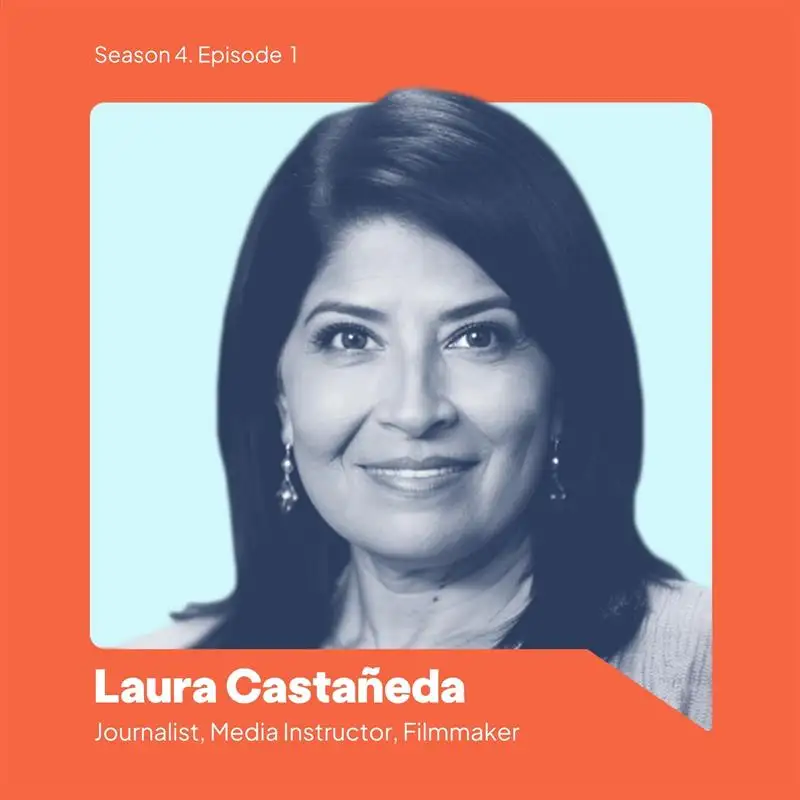
Laura Castañeda: Journalism, Trust, and Telling the Full Story of a Border Region
Grant Oliphant 0:00
All right, Crystal, we are back.
Crystal Page 0:21
season four. Congratulations, Grant.
Grant Oliphant 0:24
Well, likewise. And actually it's just, you know, this is, this is one of my favorite things that we do, because it's a chance to talk to change makers about the exciting things that they see and are working on. And I love the conversations we get to have around it.
Crystal Page 0:39
Yeah, you make me think a lot. But also, after every interview, I want to go out and experience whatever these guests are talking about. So it's a great opportunity to learn and and connect with my community.
Grant Oliphant 0:51
Yeah, well, on that basis, we're going to love the conversation that we have today. Yeah, tell us about our guest.
Crystal Page 0:59
Yeah, we just recorded with Laura Castaneda. You may know her from her work with the Union Tribune. You may know her as a community voice, but she really has made an impact in journalism here, in particular, on TV and in print, and she's mentored a lot of folks. So I think, as a Latina leading in our community, she's a trusted voice and a trusted leader.
Grant Oliphant 1:22
She's also very candid about what she sees, and has a great eye for why journalism matters and the incredibly powerful role it can play in our society. I think this, this interview, is really important as we think about the role of reporters and media and journalism in advancing democracy.
Crystal Page 1:47
And we should mention that she is the lead for the National Association, National Association for Hispanic journalism, where I got excited too, but it's na hj, so she leads that group, and they really work with journalists on both sides of the border, and that's just important that we acknowledge as a binational or tri national region, all those different voices lead to better journalism, better conversation.
Grant Oliphant 2:14
Great. Let's dive in.
Crystal Page 2:15
Let's do it.
Grant Oliphant 2:19
All right. Laura, Castaneda, thank you so much for joining me. Thank you for having me. It means a lot. It is a pleasure. And at the same time, we have a lot of ground to cover, and I know not all of it's going to be pleasant or easy to talk about, because you've lived some things and seen some things, and we're going to be talking about media and journalism and what's going on in a border community, and all the things that you've been focused on. And I really appreciate your willingness to sit down and talk candidly about this. Thank you.
Laura Castañeda 2:53
Yeah, I'm looking forward to it, and I think you that's a great statement to make that it is not an easy topic right now to talk about,
Grant Oliphant 3:02
let's start maybe with a little bit of an easier beginning. You know, you have spent a career helping San Diego understand itself, and I'm curious, as a longtime journalism observer, what you think has, what the what the media landscape was like when you came here, and how what, what you've seen change over the years, how you think it's different now,
Laura Castañeda 3:26
so much has changed. It was so different. I landed in San Diego in 95 hate to date myself, but I think it's important. At that time, I came to San Diego from Tucson, Arizona. I'm originally from Chicago, so it was a big change altogether. But when I landed here at Channel 10, we went out in crews of two, always. I never had to shoot video or edit video. I worried about the content. I worried about making contacts. I worried about writing a script and trying to be a performer on television. We had the greatest technical folks. They knew the landscape, they knew how to get around. We would often cross to Tijuana for stories. And I didn't pitch at the beginning, because I was learning the, you know, the lay of the land and whatnot, but I was one of the few Spanish speakers in the newsroom, and so luckily, I had a boss who said, go out and get a great story. In fact, he even sent me to Oaxaca for a week to follow it was my idea, but to follow somebody that was coming back and going to cross the border. So the pitching was different. The way we worked was different. We were on tape, not digital.
Grant Oliphant 4:38
So that was the mid 90s when you so you're describing, you had crew, you had time to do stories, you had the capacity to go deeper, and you had support from the leadership in terms of of what you wanted to cover. Yes, and what's changed. Changed?
Laura Castañeda 5:00
Well, you have people probably making about the same amount of money as I made back then, who are now responsible for shooting, video, editing video, writing, web stories, doing the social media and not allowed to cross the border anymore. So I'm not saying that the border is the only thing that needs to be covered by all, you know, we there's a lot of territory to cover, but you're missing the border region character, absolutely. And if you're, if you're not covering the border region, it's just as important as any other.
Grant Oliphant 5:33
And is that, is that a safety issue? Is that how it's presented?
Laura Castañeda 5:36
That's how it's described, that the insurance companies don't want to cover the vehicles or the people cover, you know, crossing the border.
Grant Oliphant 5:44
So looking back, was there a moment where you really got it about how important journalism is to a community
Laura Castañeda 5:53
that started when I was in high school.
Grant Oliphant 5:55
Oh, wow, even before you
Laura Castañeda 5:57
Yes, a long time ago, and I'm not saying I knew I was going to be a television journalist then.But what happened?
Grant Oliphant 6:03
I wish I'd been as self, self aware in high school as you were, but
Laura Castañeda 6:06
No and this is not good. This is not good. What happened, I grew up on the northwest side of the city of Chicago, went to Chicago public schools, and when I was in high school, we learned that there was a horrible situation going on at my high school. My principal, James Moffatt, was arrested, convicted, indicted for abusing students in his office. And you know, it didn't hit me then, but later, I started to realize, imagine if that one tip had never happened. You know, fast forward to Jeffrey Epstein, right? Like, if that one tip doesn't come in, or that one anything isn't covered, that whole situation could have been swept under the rug easily. And so it was then that I realized, you know, that changed the entire story of my high school, of all of those, you know, poor victims that were involved, they were young. You know, I can't imagine what it did to them so and this man would have gotten away with it. So those types of stories
Grant Oliphant 7:13
Did that make you want want to become a journalist at that point, did the light go off? At that point, it
Laura Castañeda 7:18
made me angry that too often communities of color are completely ignored because my neighborhood was very much a community of color, yeah, and we only saw media in my neighborhood when there was gang violence, you know, not even if somebody got killed. It depended on the circumstances. It was always negative or there was an accident. They didn't come to our school to cover something fabulous, or our neighborhood, we didn't see that and and I know in the city of Chicago is different than San Diego. You have a bigger market and you have much more going on, and so they're going to be more selective. But I did work in Chicago. I was very lucky to get my first job in news in Chicago at the ABC station. So i i I witnessed the way stories were developed. I witnessed how they decided what stories they were going to cover. I was very, very fortunate that I got in on that.
Grant Oliphant 8:09
Yeah, and then, so what? What prompted the move to San Diego?
Laura Castañeda 8:14
Well, I had, I got my first job in Chicago, and I was able. I was not in front of the camera. It was all behind the scenes, production assistant, writer, Assignment Editor, put a tape together, waited until I got a blessing from five very hardcore reporters who said, okay, kid, your tape is good. Send it out. And I did. And I sent it everywhere, across the United States. I didn't care where I went, and I ended up in Tucson, Arizona, which was a blessing. Learned a lot about covering the border, and then when I felt like I had outgrown Tucson, I started looking around again and and I had two interviews the same week, one in Milwaukee, Wisconsin, and one in San Diego.
Grant Oliphant 8:52
That's a contrast,
Laura Castañeda 8:53
I know, but Milwaukee was so close to home, right? And I never dreamed that I was going to go further away from home. I thought I was going to go closer. And when I visited both stations, because back then, they actually did that. They flew you out. They let you spend time at the station and meet the people that work there. Everybody in Milwaukee was miserable. It was the dead of February, yeah, and I came here and everybody said, You're gonna love California. You should come here
Grant Oliphant 9:19
from, yeah, I moved here from Pittsburgh, so I had a similar experience of, you know, contrast in terms of weather and optimism.
Laura Castañeda 9:30
Yes, and this market was incredible. There was a so much to offer. And because of the border, border, it just it grabbed me to want to do more Border coverage.
Grant Oliphant 9:40
Well, so let's go with that for a moment and talk about this San Diego as a border town, and we're talking at a moment in history where that has even more significance than maybe it ever has before, in a national conversation, an international conversation about global move. Moments of people we consider ourselves a binational region in San Diego. What responsibilities does that bring to journalism that you wish journalism today would be paying more attention to?
Laura Castañeda 10:15
I always felt that as somebody who covered the border as a beat, yeah, that you have to weigh the good with the bad. You can't just develop this narrative that Tijuana is this scary, ugly place that you should avoid, because there's a lot of amazing things that happen there. And so when in the 90s, when I was covering a lot of the border, and when I was teaching, because I also taught at City College for many years, and I would encourage my students, many of them lived in Tijuana. I was like, find the stories that are compelling but original, that people need to know, you know? And so I felt that that there needs to be that responsibility with a lot of the media, and they don't do that. They don't I mean, we had a horrible situation last week, we saw it unfold, right?
Grant Oliphant 11:03
So you and I are talking, just in case people are seeing this or here listening to this later, right after the killing of a cartel leader in Jalisco. In Jalisco, right, right? And and violence erupted across Tijuana.
Laura Castañeda 11:20
Yes, and I spoke to a number of journalists, and I was checking on some, some of our nahj members. And, you know, Is everybody okay talking to a journalist from Mexico, you learn a lot about how they how they balance the danger with not stopping to be a storyteller like they. You know, no one's gonna risk their life, obviously, and you worry about your family, right? But they know how to work around it. They know when to go
Grant Oliphant 11:52
right well. And in fact, many journalists in Mexico have risked their lives to cover those. You know, it's interesting. I'm reflecting on your first experience and the negativism of the coverage that you experienced in your Chicago neighborhood, and then how you look at the responsibility of being a journalist in a border community the rest of the world looks at the violence of last week and says, Well, you know, that's the story. Why wouldn't it be covered? How do you think about that as a journalist and think more broadly about culture and economics and politics, so that you're painting a broader picture of a region?
Laura Castañeda 12:35
I do know for a fact that there are many Americans that are moving to Mexico for affordability, right here in our own backyard, you know, Rosarito, Tecate, there's communities, yes, yes, but I'm saying even close, you know, just crossing the border and and you can live a comfortable life there and a safe life there, and you can have the best of both worlds. Because when you need to come back over here to the US and get a PO box and get your mail here, or whatever. You know, you can take advantage of those both of both worlds, but there are conveniences that we have in the United States that you might not have there. Your water might go out for two days if you live in Rosarito, and it's just a fact of life, right? But sometimes I think it's good for Americans to just get a taste of that so that we appreciate what we have. And I've been in deeper communities in Mexico, and I just see people happier with what they have, not wishing they had more.
Grant Oliphant 13:36
I mean, when you think about the journalism landscape, do you think it's a responsibility of journalism to capture those stories about life so that we understand each other,
Laura Castañeda 13:45
yes, and and again, we can't. We can't just ignore the violence. We can't ignore the bad stuff that happens. I think people need to know to you know, how to prepare themselves. Or people are that are planning to go and live there, or be snowbirds in Mexico, you know, go in the wintertime there and then go back home. Just understand that there are so many great stories. There are two the good ones, positive ones, good things happening. And so I think if you balance that, that's responsible journalism.
Grant Oliphant 14:14
Okay, yeah, that's that's really helpful. Because I think it is important to acknowledge the need to cover Daily News and facts about what's going on in the ground, but not to succumb to that old media canard of if it bleeds it leads and having that be the only story, right? Yes, very much. So how do you think the media ecosystem has evolved in terms of painting that broader picture. Since you started,
Laura Castañeda 14:44
I think it's gotten a lot worse, and I'll tell you why. That goes back to diversity. Back when I started here at Channel 10, there was probably four Latino journalists, or I should just say, journalists, not necessarily Latino journalists. Journalists that understood the border region and were willing to go across the border, because there were many that would would not even go across the border. And the numbers of journalists today in newsrooms are thinner. You have fewer, fewer journalists, period. And then you have fewer there's less diversity. So you don't have Latino journalists or journalists that are willing to cross the border to go find the other side. You know, the other stories, they have partnerships a lot with Mexican stations or newspapers, and they're trading information that way. But there's not enough bodies that are actually willing to go to the story. And that's, that's where you start to lose the reality of what's going on.
Grant Oliphant 15:44
So as you're as I'm listening to you paint a picture of what you think good journalism is in the context of a border community like ours, I'm hearing thoughts about having an adequate team, obviously a well trained team, but also a team whose diversity reflects the population that you're trying to serve, which makes all the sense in the world, except right now in the national dialog in America.
Laura Castañeda 16:15
do away with DEI, not add more, yeah,
Grant Oliphant 16:19
but say a little bit more about why you in your experience, why that was important.
Laura Castañeda 16:24
Well, if you have 30% of the population in San Diego Latino, I looked up some numbers, 13% Asian, 5% black. Don't even get me started on the Native American community, which is completely ignored. That newsroom needs to reflect those numbers because you want them to be subscribers. You want them to tune in. You want to tell your advertisers we have this audience and that audience, but you're not covering these communities. You don't have the faintest idea of what's going on in these communities. And so that's why I think it's super important to have journalists that are willing to really make those community connections and find out what is happening in those communities that the general population would want to know about and needs to know about.
Grant Oliphant 17:16
So obviously, we're, you know, we're dealing with a very different media landscape today than you encountered when you came here in the mid 90s, or when you started in your career. And that's not just San Diego, that's national where we're to your point. We're seeing the hollowing out of newsrooms, where we're seeing a thinning of the ranks. People are getting their news from all kinds of different sources, if they're getting news at all. Crystal and I were talking this morning, and you know, the term that somebody is using came up that now people are getting their news ambiently, which feels terribly unintentional, and probably is as you reflect on what you saw here at its best and what you think journalism looks like at its best, what can other communities or our own learn from what you saw of San Diego's journalism at its Best?
Laura Castañeda 18:18
I do know that there are more nonprofit newsrooms that are alive, and I wish I could say alive and well, because they're, they're, we're pitted against each other for the same funding, right? And trying with fewer bodies, trying to cover as much as you can and whatnot. But I just think that. I just think that there needs to be a change in the model, the model to keep journalism alive. I don't think journalism is dead. I just think it's changing. And, you know, there are some people who might say, Okay, we know that younger demographics are getting their news from Tiktok. Let's not pretend, right? I have young folks in my home. I know I talk to my kids a lot about this. They don't sit down and watch nightly news, but they're constantly on those phones looking at Instagram. And now we have AI to worry about, and is that real? Is that information fake? You know? So I think re educating some of the newer making sure we're on top of technologies and changing the curriculum in schools. You have to, you have to meet the audiences where they are, if that's where they're going to get their news. We got to make sure it's real. We have to make sure that we're still covering those things that otherwise wouldn't be covered. In some in some ways, it's a little easier, because if you give those younger demos what they want, they want quick stories that last 10 seconds and have subtitles on them, right? They're not going to sit there and watch a whole story or read a 700 word piece. They're just not
Grant Oliphant 19:56
that's, that's just the reality. But I'm, you know, I'm curious how you view trust in that context, because a lot of what you're describing, and we're going to get to the controversy that you lived through here, which really, I think, does focus on some of these lessons and and on the issue of trust. But before we get to that, you, I think, have focused in your career on how communities come to trust the journalists who cover them and and part of that, from what you were just describing, is, well, they respect them enough to listen to them, and they engage with them, and they tell the positive stories of what's happening in their community. They look like them. Is that happening in this modern context of the way in which people consume news now
Laura Castañeda 20:52
not enough, and I remember when I first came here, I knew one person in San Diego when I when I landed here, he was a friend of a friend that was at Camp Pendleton. And my mentors, my news mentors in Chicago, told me, as you move on from city to city and you don't know anybody, make it your business to go and meet people that you know, make a list of the key players in that city, and some of them who are just, you know, Uber drivers and cab drivers, and get to know people and connect with them when nothing's happening, so that when something does happen, they trust you, because you can't just keep showing up when something's, you know, when you need something from them. And that was the best advice I ever got. When I first got here, I made it a point to go visit with a few of the city council members. And they kept asking me, well, the secretaries would say, Well, what is the purpose of your visit? And I said, Well, I just want to meet him. I just want to get to know him. I'm new, new reporter in town. Hmm, no one's ever done that before. And and they took the time to meet with me. And I remember Juan Vargas was in as a city councilman at the time, and if you ask him, Congressman, yes, and if you ask him today, he may, may remember that I did that. I don't know he's actually my congressman, but you know those are the key things that are important, is getting to know not just the politicians, by any means, but community leaders and people whose voice is too often left out of the mix.
Grant Oliphant 22:29
Well, why don't we go there now and and talk about ways in which it is possible for journalism to account for voices that might be left out of the mix. You were part of a community advisory committee for the legacy newspaper in San Diego, the Union Tribune, and you made a very public decision at a certain point to step down from that role because of a refusal by the paper to run an editor a column that you had written. Can you tell us a little bit about that in your own words?
Laura Castañeda 23:09
Yes, so just a little bit of a correction there. I did not step down. My position was eliminated four hours after they refused. And when I say they the publisher, the new publisher, because the paper was sold in 2023 so the new publisher, Ron Hassey,
Grant Oliphant 23:27
that's an important correction, by the way, that yeah, that it was taken away.
Laura Castañeda 23:31
I was on the editorial board. I was one of two Latinas on the editorial board, which is rare. There's not a lot of Latinas on an editorial board in a metropolitan paper the size and this was all you know, in the old regime, the old management when I got there, and then the paper was sold in 2023 I landed at the UT in 2020 paper was sold in 2023 When the ICE raids started in Los Angeles, myself, Tanya Navarro and Chris Reed were on the board. We went from a board of seven to a board of three. The other board members either retired, left on a buyout, and so there was three of us, and we were still trying to be a board, but we were being censored. There's no question about it, we were being censored. They we wrote this editorial. We turned it in, and the publisher came back and said, No, we're not publishing that.
Grant Oliphant 24:28
And the editorial said, What?
Laura Castañeda 24:29
The editorial was never published. It's still owned by the Union Tribune, so I can't read it word for word, but I can tell you the clear message, underlying message, was that the Trump administration should not have sent in the National Guard because it flared up a lot of the rioting and a lot of the upheaval in the streets of Los Angeles, and he didn't see eye to eye with our editorial. That was the first time in my life that I'd ever seen an editorial that we wrote, get kicked back. Jeff light, never, ever the previous publisher, never, ever butted in to the editorial board, and he was part of it, but he never stopped us from publishing an editorial so this was something that was new. It was not good. We had already been told that we could not make any endorsements in the presidential races, state races. So that was a complete different change from when I landed right four hours later, I was called in by HR and told that my position was eliminated. And I said, Wow, that's quite a coincidence. And they insisted it was not performance, it was monetary, and I don't buy it.
Grant Oliphant 25:44
On the face of it, I can see why, but say a little bit more about why you don't buy it, what you experienced in terms of what was going on.
Laura Castañeda 25:51
So in addition to publishing commentary, I was also in charge overseeing a project called the Community Voices project. And again, it was launched by Jeff light and Matt Hall, who was my boss at the time, previous the previous regime, yeah. And they had this brilliant program, and their idea was to try to diversify more voices in San Diego and bring them to the paper. They were really working hard to do that. And so not only at one point did Jeff light write a letter of apology to communities of color in San Diego, and it was published, and he just went on to say that, you know, they'd done a poor job, and that they were going to try to do better. I saw the diversity in the hires. They were trying to get more people of color in different areas, reporters and editors and the editorial board had a nice mix of diversity, and so this project was meant to encourage community leaders and people who are often left out of the conversation to write commentary. We had 70 writers, Seven, zero, and they didn't all turn them in at the same time, but it was kind of rotating. And they would write like, you know, every two or three months. And they came from all walks of life, all ages, all demographics, you know, different religious backgrounds. We had a couple high school students, professors, educators, politicians, and so we were over. I was overseeing the project, and then when the paper got sold, the new person that came in, how can I put this politely, he was degrading some of not only what the folks were writing and they were submitting, but he was personally attacking them in emails, messages to me, saying, This sounds like a Hallmark card, or, you know, we're not.
Grant Oliphant 27:49
So dismissing their experience and their
Laura Castañeda 27:51
100% that bothered me a lot.
Grant Oliphant 27:54
You think that's, you know, I'm just curious. Some people would look at that and say, that's obviously wrong, because that's being directed at the diverse constituency of the community. Other people might look at that and say, well, they're new owners. They have a right to steer the paper in a new direction, and we've seen a lot of that over the past year. Why, in your opinion, was it important to say this isn't right?
Laura Castañeda 28:26
Because if you're going to make those changes, do it and let the community decide if they want to continue to subscribe to your publication. But those announcements were never made. They also let the entire Spanish language section of the San Diego Union Tribune go in a day they just fired everybody.
Grant Oliphant 28:44
So with no no articulation of that,
Laura Castañeda 28:48
Nothing and I raised my hand in a meeting with the leadership and asked, what message can I possibly give to the community, because I am very well connected to the Latino community here. How am I supposed to respond to that? What, you know, what? What are the talking points here? And I was dismissed. I was I was told this, we're a business, we're not a social service agency. And, you know, that's, yeah,
Grant Oliphant 29:15
but, you know, it's, it's interesting that that was the perspective that they articulated. But you're arguing, and I agree with you, that the business of journalism is to reflect the community. That discussion didn't nothing carry weight at all
Laura Castañeda 29:32
zero.
Grant Oliphant 29:32
So then it was just treated as a social agenda, as opposed to good journalism itself.
Laura Castañeda 29:38
And it just continued to get worse and worse, until pieces were being pulled. There was one incident where a piece was pulled by a student at UCSD without her knowledge. I mean, that's not that's not ethical. You at very least need to let that author know. You know what. I know your your piece was published, but for X, Y and Z reason, we're going to take it down and there was never any any warning to the author that's to me that just didn't sit right.
Grant Oliphant 30:06
All right. So the reason I wanted to take that journey about your experience in part just because it deserves to be discussed. But when you think about how journalism builds trust, what I hear you saying is that being upfront about whatever it is you're doing is important, that reflecting the community is important. Based on what you learned through this experience, what else would you want other journalism organizations and other communities to know about what's still important about journalism in this era.
Laura Castañeda 30:46
it's so unfortunate, but journalism cannot survive right now without subscribers and without supporters. I mean, look at KPBS. They're constantly doing membership drives and trying to get people to support right especially after they lost some federal funding. You can't survive without those audiences. Those are, you know, and I'm not saying that you should cover stories that are not stories, but as I said, if you balance what you have there, you're always going to be covering some connection to the community. And people have a choice. We're consumers. We're also consumers, right? And so if you don't serve the community, you're going to notice that you're going to lose the support from that community. I mean that just make to me, it just makes sense.
Grant Oliphant 31:32
I want to tie this back to to young people and a new generation consuming news like you were saying through Tiktok and Instagram, and not just them. I mean, I, you know, I think it's the statistics now or that so much of society receives its news in that way through influencers. And how, how does journalism build trust with those constituencies in an era where they're not necessarily reaching people directly,
Laura Castañeda 32:06
they have to reach people directly. They have to make the personal connections with communities. If you want to cover City Heights correctly, you need to go over there and you need to meet the community leaders. You need to meet people who are looking out for folks with housing and health care. And you know, I always used to tell members of our editorial board, the original crew that I that I worked with at the Union Tribune. When's the last time you rode the trolley from San Isidro on the blue line all the way up to La Jolla. Look who's on the trolley like that's San Diego, you know? And if you don't, and you don't experience the it's not just the affluent areas in San Diego. We have a lot of them, and you know, that's great, but that's not everyone's world, right? And so I people, journalists, need to get out of their bubble, and they need to have face to face talks with community folks, and that's the only way you're going to cover those communities and gain trust.
Grant Oliphant 33:09
And would you say the same for influencers who want to be seen as journalists, or
Laura Castañeda 33:15
that's a really hard subject for me to talk about. I think there's a place for influencers, but they cannot replace journalists. I think that, you know, people love food, they love coffee shops. Maybe that's where the influencers should stick to, you know, influencing people about travel and where to stay, and you know, who has the best matcha in town. But as far as trying to cover,
Grant Oliphant 33:40
you don't think they can play an important role in amplifying the reporting of journalists?
Laura Castañeda 33:45
you know, I have a hard time believing that right now. I've been watching a lot of the coverage in Tucson with the Nancy Guthrie case, which is very unfortunate. And I worked in Tucson, so I'm, yeah, very close to that, you know. And I see a lot of the influencers trying to be journalists there in those communities, and they're really irritating people. You know, they want clicks. They want the attention. They want to go to somebody I don't know. You know how they're, how they're how they monetize, but they're not, they cannot take the place of a journalist, of an experienced, reputable journalists, they cannot
Grant Oliphant 34:23
what happens when what happens to a community when strong local accountability journalism like you're describing disappears or comes under economic threat or is taken away because A new owner decides they don't want to do that anymore, or there's a political reason not to do it. What happens?
Laura Castañeda 34:49
I think two things happen. You have wealthy people who own these papers and digital sites or televisions stations creating the narrative about reality. You know, they're taking away reality and replacing it with their narrative. That's what I think, is one thing that happens. The other thing is that you're just not really covering the communities that need to be covered. It's not a it's not a full sense of what's happening. And you also have people getting away with, I don't want to say murder, but you know, definitely can get away with doing things and not being held accountable. And you know, journalism shouldn't always be someone sneaking around trying to, you know, pop somebody's they didn't, they didn't, uh, account for this money that's missing or that, you know, trying to this, this gotcha mode. That's not what journalism should always be about. But, you know, the documenters program is a perfect example. Now they're training people to go to these community meetings. If there's nobody at those community meetings, you're going to see things on that agenda never make their way to the headlines
Grant Oliphant 36:04
because there'd be nobody to see it. And the documenters is a program. We fund it, by the way, but there's a the documentaries is a program that invites citizens in to go in and observe and and write about what they observe.
Laura Castañeda 36:20
Yes, and I've seen, you know, thank goodness you're funding them and and I've seen ordinary citizens help break stories and let people know that something was going on. Otherwise, you know, they'd get away with it. I hate to say it like that, but there's not enough bodies that are able to go to the city council, to the County Board of Supervisors, to the school board meetings, where a lot of things get discussed, either behind closed doors or there's just no reporters in the audience to find out about it.
Grant Oliphant 36:48
You know what you're saying? Reminds me of and I use this line often. It wasn't my line, but I the NYU Professor Clay Shirky. I heard him talk once with a group of us about early on in the transition that was happening with journalism. And he said, Look, you know, when the the old business model was really news was paid for by the classified section and advertising and the fact that news and sports and all of that were bundled together with the only place where people could place ads, is what drove the newspaper model in particular. And he said, when that dies, which it was in the process of doing, he said, you're going to see eventually something will take its place. And you're talking about how the new model is rising, but we don't know what that looks like yet. But when that dies, he said, You know, there's going to be a period of widespread, endemic civic corruption, and it's because of exactly what he was pointing to was the fact that nobody pay attention. But when I hear that from you and I, you know what I you are, you are echoing what I deeply believe. You know, I am passionate about journal the role of journalism in American society and in democracy and in helping us understand what is really going on. It's a hard case to make today. You know, a lot of people look at it and they just don't see it. It's just not part of what's on their radar screen. You know, that's not how they're getting news. It's not what they even think of as news, and a very concerted effort has been made to denigrate news as biased. So when you talk to groups about why it's important and why journalism, despite its human flaws and just isn't inherently biased when it's done well, what do you say? Because I need to make a better case. Well, I'm just curious.
Laura Castañeda 38:56
It's getting harder and harder to make a case because this this nation is so divided right now. And you know, do you watch Fox or do you watch CNN? And when, as soon as you tell me which one you watch, then people attack you for, you know, being on this side, right? I think that there are biases. I think a lot of journalists have biases. And, you know, there are, there are many stories where you, you absolutely should tell both sides of the story, but, and I've defended journalism for so long here, but there are also instances where there, there might not be two sides of the story. One is so clear, like there is no other side, you know, yeah,
Grant Oliphant 39:41
and so when you're helping people to understand, you know their competing goods and how people tell stories, and they include advocacy, storytelling, accountability, journalism, just simple reporting. What's the difference between them? And how do you how do you help people understand, as readers or consumers, to understand when they're when, when they're experiencing a piece of advocacy, as opposed to a piece of journalism?
Laura Castañeda 40:15
When you read an opinion piece, it should be very clearly labeled that it's opinion. You know, 100% and I find that there, the whole time that I worked in the opinion section, there were still many people that didn't understand the difference. And so it's educating the public. It's, you know, journalists talking to community groups, you know, something as simple as trying to help them understand if you have a story happening in your community, here's how you go about trying to get it covered. Yeah, because a lot of them don't know. So I think this, it's education still, you know, as the as the generations evolve, trying to understand what this younger generation is after, hopefully it's just the truth, if, they're just willing to want the truth, maybe there's another formula that we're not looking at, that we can bring them the truth in short, little clips that they can understand, but to teach them how to know the difference when something's fake and when it's not. So I think it goes back to education and again, just that, that one on one, connectivity with communities.
Grant Oliphant 41:23
So I want to go back to the subject that of the editorial that got spiked when you were doing your work for the UT. To broaden that out from that editorial, what is the story that journalism right now, is not getting right about immigration? Is there one?
Laura Castañeda 41:47
Oh, that's a very loaded question. I think that there was a movie, a political satire. You may or may not have heard of it, called A Day Without a Mexican Have you ever heard that? I confess I have not okay, look for it. It's funny, it's silly, but it brings home a point. Imagine this country if you took away every immigrant, right, not just Mexicans, but every immigrant from this community who is going to take care of your children, you know, take care of the elderly, clean your hotel rooms, drive cabs. Imagine what that would look like a day a week, you know. And so I think that part of the story, how many? How many immigrants are working two or three jobs just to make ends meet? You know, paying taxes, all those parts, but we're not seeing the humanized part of the story. You know, you might hear somebody mention it or a little paragraph in the story, but follow somebody around for a week and see what their life and then you want to talk about immigrants and not, you know, getting in line for paperwork, if you only knew that process. I went to Ciudad Juarez two years ago, and I saw with my very I came back and I told the UT, that's a story waiting to happen. There needs to be a guide to walk people through this convoluted, expensive process that can take anywhere from two years to 17 years, depending on who you are. And most Americans don't know that. You know, why don't you? Why don't they get in line? Why don't they get well, let me tell you, that line is not as easy as it looks
Grant Oliphant 43:28
well on many, many, many of the people now being targeted for deportation were in that line, yes, and are here on legitimate paper, yes,
Laura Castañeda 43:38
and are trying to follow the rules and do the right thing and and so those stories need to be told. I don't think we're going to change anybody's mind, you know, for somebody that has their mind made up that, you know, get them out of here, but be careful what you ask for.
Grant Oliphant 43:55
You know, it's so interesting. I think the day without a Mexican documentary that you talked about, you know, to that list, I would add, and also, who's going to be starting your entrepreneurial companies, who's going to be employing your kids down the road, who's going to be driving the demand for future Continuing Education, who's, you know, so on, and actually, who's going to main make it, make it possible for Americans to have their benefits in retirement. So much of that comes from our immigrant population. So clearly we understate that that story doesn't get told enough. You mentioned the human is the human side of the story, and then just the sheer facts about what it's like to be in that system and who's being harmed by the current attacks on immigrants. Do you see journalism backing away from those stories because they're seen now as partisan? Is just to tell the
Laura Castañeda 45:01
truth about there's some of that, but I also think that there's just not enough support in a newsroom for the leadership to say we need to make sure that we're covering, you know, those communities and can, you know, go, go connect with the Chaldeans. Go connect with the, you know, the many immigrant groups in city heights, the border is not just at San Isidro. There are many immigrant communities up north, in San Marcos and Vista. You know, there's, there's a lot of misconceptions. And, you know, there's people of color everywhere in San Diego, not just these polarized little neighborhoods. I grew up with that in Chicago. Chicago was very, very segregated, right? With a lot of
Grant Oliphant 45:49
good point though, that in San Diego, we are a border community, not just because there is a border to the south of the county, but because there are immigrants all over the county, yes. And people with whose families came from recently came from other countries,
Laura Castañeda 46:07
yes, yes, for sure. And the Native Americans, I mean, I have been
Grant Oliphant 46:12
we frequently in our work, refer to this not as a bi national region, but as a tri national region
Laura Castañeda 46:17
Yes, it absolutely is
Grant Oliphant 46:19
We have this extraordinary presence of Native American and they are
Laura Castañeda 46:22
completely ignored. I recently started writing some articles for Indian voices, which is another paper that you support, right? Yes, and they're doing their best. They need a lot of help. The publisher is a senior, and she knows everybody. I cannot tell you how many people I've met in the past three months. And do you know Rose Of course, I know rose Davis. You know, if you don't know who rose Davis is, you need to learn who rose Davis is. She's the publisher of Indian voices, and she dedicates her life to that publication.
Grant Oliphant 47:00
Oh, I think the, you know, some of the publications that we're working with now very community centric, are there? It's extraordinary, the people behind them, the level of commitment that they have to telling the stories of their community, and they're very brave about it, you know, yes, I think as well. So that's a good place to turn this conversation, maybe in a more you know, we've talked a lot about challenges, and we've talked a lot about what's difficult in this environment. I want to talk about what the future looks like, and where you see rays of hope, because you have been an educator about this, and you, you do work with young people on it. You're president of an organization, the San Diego Tijuana chapter of nahj, by the way, can you spell out that acronym,
Laura Castañeda 47:55
National Association of Hispanic Journalists, right?
Grant Oliphant 47:57
And so your work, you're getting to see an angle on this that many of us don't. So when you're looking at journalism now and how it's evolving in this community, what gives you hope?
Laura Castañeda 48:10
I think there's still a thirst for journalism, and it really has to start again, going back to the colleges and universities that are training, the departments are getting cut really, really bad. And City College is not the same place when I retired in 2019 that is not the same place as it is today. They have just chopped away at that department, and it's happening all across the board, as funding is cut in an entire university. They're looking around and saying, Well, you know, let's see the numbers of students enrolling. And there's not as much interest in straight up journalism as there used to be. There's still student newspapers being published, thank goodness they're online, but the curriculum needs to, needs to be updated. Yeah, you have to have social media in your curriculum. Oh, yeah, you have to, and there are jobs. And it's one thing we didn't talk a lot about with journalism, is it's so unfortunate you have to be able to afford to be a journalist. Now, you know the pay scales are so low, and it breaks my heart, because there are talented people that might have their heart in the right place, but they literally have to leave the industry because they can't afford it anymore to stay in it.
Grant Oliphant 49:28
So the focus on on journalism education is going down because students aren't demanding the courses, because the pay isn't good and the hours are long. What's the point? Society is right now, but you still have students that you talk to and aspiring journalists and so what? What do you see in them that gives you hope? I mean, I'm just curious what you're hearing and seeing from them that makes you believe there's another. Generation of journalism coming.
Laura Castañeda 50:01
They are curious. They are curious, and they are not willing to just lay down and and let democracy fade away because there's no journalism. You know, I think there's still the passion. And that's, that's the bottom line. If you don't have passion, like, do not go into this industry, because you will be miserable. You have to have the passion, you have to have the curiosity and want to hold people accountable. And I still see that. I still see that out there. It's just that we have to meet people where they are with what they're willing, you know, to pay for people don't want to pay for journalism, right? You know, they don't, and it's getting tougher and tougher, but I just, I see some of the dinosaurs like me still at it, you know, still wanting to keep doing this, this field. And just
Grant Oliphant 50:55
what advice do you give the young people?
Laura Castañeda 50:57
I tell them that you still have to learn the basics. You still have to learn the basics of fat fact checking. And you know, you can't just run with a story because your neighbor told you it was true. You have to fact check it. You have to know that the information is good. Learn how to file a Freedom of Information Act. Follow the paper trail. You have to know those, those nitty gritty, you know, detail. Watch, watch All the President's Men. Watch some, you know, some of those great movies that will just make you want to keep running with the journalism torch. But you got to sharpen your skills. And you have to, you have to know some of this new technology. You have to be able to tell if somebody gives you a copy of a passport that it's a fake passport, you have to be able to do that. And so that's where, you know, I tell them, journalism is not that it's changing, and in order to continue to do great work, you just you have to have the passion, you have to be willing to know the basics. And you know, hopefully there'll be more foundations like yours that continue to support because I keep hearing your name mentioned. You know, we received a grant from Prebys Foundation, and they supported us, and they supported us, and without that, I mean, you can't be the only one supporting journalism in the whole world, right?
Grant Oliphant 52:15
Well, I you know, I think what's remarkable about San Diego is that their philanthropy has, writ large, has been involved in supporting a new model of journalism for a while, and at Prebys, we really do view it as essential civic infrastructure. You know, it's without it, we don't know, to your point, I mean, everything you've said without it, we don't know what's going on without it, the things we care about, like youth development and medical research and health care. I mean, just think about all the stories that help people understand why these things matter and recognize disinformation when it's being thrown at their, you know, at them. So we, you know, we, we absolutely understand that it is important to what we do, and we have funding partners in the community. And we need more. Yeah, we need more. It's, it's clear that, you know, if this, this is essential to democracy, and we need, it's dire. We need, yeah, we need more. People have, has any young person ever said something to you that just made you stop and think, Huh, that's new in there. And as they think about journalism today,
Laura Castañeda 53:32
I've been amazed at watching my students grow into working journalists, the ones that I had at City that, you know, I also taught at State for a little bit and Palomar, just seeing some of them go on to do media careers and be be journalists. And I could see the, you know, once they started to do some of the things and put them into practice, like breaking stories, and, you know, they, they would send them to me and tell me, you know, the the wide eyed student that once didn't have confidence in themselves is now breaking stories. I mean, that's amazing. I had a couple of them that made it to the network, so they, they had that fire, you know? And that's really, that's really what it takes. And these newer generations, they they do things so differently than we did. You know, they do, but I still see fire. I still see, you know, fire in their gut. I still see them wide eyed about wanting to learn more and saying, I want to be like that person. I want to be like that person, so I think as long as that continues, there's hope, but we still got to teach them the basics.
Grant Oliphant 54:46
Well, Laura, I just we could go on,
Laura Castañeda 54:50
I know,
Grant Oliphant 54:52
but we're running out of time, and I just want to, is there anything that you wished I would have asked you that I haven't asked you?
Laura Castañeda 54:58
Oh, boy, I. Um, I just want people to remember that they're consumers too, and they have a choice of what they subscribe to, who they support and and when people don't like something, they need to speak up, and sometimes they don't
Grant Oliphant 55:17
terrific place to end. All right, thank you so much for what you're doing for what you have done, you know, in helping tell the stories of this community.
Laura Castañeda 55:25
Thank you.
Grant Oliphant 55:26
Well, Crystal, what did you think
Crystal Page 55:32
that conversation had me leaning forward for so many reasons. She gave us so much to think about. But I'm curious, as the interviewer, what stood out the most for you?
Grant Oliphant 55:43
Well, I think she touched on so many important things, like the the value of having reporters who look like and are from a community, because they'll capture the news, but they'll also tell the story of what that community is really about, and what its assets are, and what its strengths are, and what makes it beautiful that's important. You know, she talks about just the role of good journalism in advancing democratic conversation and having a healthy civic dialog. And those are just a couple of the ways in which she, I think, nailed why this matters
Crystal Page 56:20
Absolutely. And the way in which you two talked about, when she did the Community Voices project, it wasn't even just that those reporters are from the community, but also that you build that trust. I loved how she talked about coming to town for the first time and going to visit council members and meeting, you know, taxi drivers and things like that. And that is real trust well,
Grant Oliphant 56:42
and we know from our work that's also when we're at our most effective. We're doing the same thing, and certainly for journalists, that is, that is a real thing. Yeah, I also appreciated, I really did appreciate her candor. You know, the she's very honest about where she thinks people in organizations and her experience have fallen short or are falling short, and how we can do better. And I think that's the message. Is that, you know, we're going through a really radical transition in how society pays for and engages with journalism, and it's not clear yet how it's going to become sustainable in the future, but what is clear is that doing it well is really important, and that there are certain principles that don't change just because the market changes.
Crystal Page 57:38
I appreciated when you asked her about how to support if you care about things, and she went straight into reminding people that they should be subscribers. Yeah, of things they care about. It is a really good reminder, because there are things that I really care about that I'd subscribe to. But I guess I only figured that applied to nonprofit journalism, and it sounds like it matters just as much on the commercial side these days
Grant Oliphant 58:00
Well, clearly, in the in her articulation of it absolutely and, you know, as we're as we're looking at this really rapidly changing media landscape, adhering or just remembering the principles that she's talking about will be helpful. I also think that it's one of the takeaways for me from this conversation was San Diego is this incredible community with rich diversity the border and the and immigration issues and this, this vibrant culture. We need journalism that captures all of that, and that isn't just crisis mongering or that is ignoring everything entirely. There is a role for journalism that where San Diego could really model the way for the rest of the country. I'm excited by that.
Crystal Page 58:53
Me too. I think it kind of goes in parallel to what we do at the foundation, but the the idea that it's not just the bad and the ugly, but the good, right? The arts and culture, what kids are doing in schools, and even going back to her own example of being in high school, and what it meant to have those truths be in the light, it really struck me as we need all of that to have a better picture of the world around us.
Grant Oliphant 59:20
Well, let's stop there, because we're out of time. But I love that you're what you just said. Let those truths be in the light. What a great way of summing up this conversation.
Crystal Page 59:31
Thanks for a great interview.
Grant Oliphant 59:32
Thank you.
Grant Oliphant 59:38
This is a production of the Prebys Foundation,
Crystal Page 59:41
hosted by Grant Oliphant
Grant Oliphant 59:43
co hosted by Crystal page
Crystal Page 59:46
produced by Adam Greenfield, Tess Karesky, Edgar Ontiveros Medina and Crystal Page
Grant Oliphant 59:53
engineered by Adam Greenfield,
Crystal Page 59:57
production coordination by Tess Karesky.
Grant Oliphant 1:00:00
Video production by Edgar Ontiveros Medina,
Crystal Page 1:00:04
special thanks to the Prebys Foundation team.
Grant Oliphant 1:00:06
The stop and talk theme song was created by San Diego's own Mr. Lyrical Groove
Crystal Page 1:00:12
Download episodes at your favorite podcatcher, or visit us at prebysfdn.org